Blog
Posted on October 28, 2015
By Emma Schwartz of NetHope, a GlobalWA member
 Today, over 1.8 billion adults in developing countries still lack proof of identity. Without official ID, this population is unable to access essential services such as healthcare and social welfare benefits and exercise fundamental human rights like the right to vote and the right to education.
A new report from the World Bank and Accenture identifies a comprehensive strategy and implementation roadmap for developing nations seeking to build or expand citizen identity programs, regardless of a country’s level of technology infrastructure. The report, titled Identification for Development – Integration Approach (ID4D), shows that developing nations can reap the benefits of universal ID by gradually moving toward the use of standard requirements and by deploying interoperable technologies.
Read the full article at solutionscenter.nethope.org.
Posted on October 14, 2015
By Kaitlin Marshall
 October 16 marks World Food Day, a day to bring people together to demonstrate their commitment to eliminating hunger within our lifetime. World Food Day was first observed in 1979, and was established to celebrate the anniversary of the creation of the Food and Agriculture Organization of the United Nations (FAO). Various events and campaigns are hosted by governments and non-profits on World Food Day to engage people in action against hunger. In North America, for example, such happenings typically include food drives and packaging events. Around the globe, people participate in advocacy marches to encourage people to participate in the fight to end hunger and malnutrition.
Continue Reading
Posted on October 1, 2015
Wendy Prosser, Program Manager for GlobalWA member VillageReach
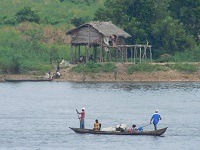 Many people in global health talk about how Coca-Cola supply chain practices could be applied and adapted to health commodities to ensure that vaccines, malaria treatment, family planning commodities, and many more essential medicines are available at the last mile health facilities. And they have a point—I have seen Coca-Cola in pretty much every village I’ve been to in Africa throughout my almost 20 years of going to these remote places.
However, that cannot be said for the south part of the Equateur Province in the Democratic Republic of Congo.
Continue Reading