New Executive Director Announcement
October 9, 2024, Seattle
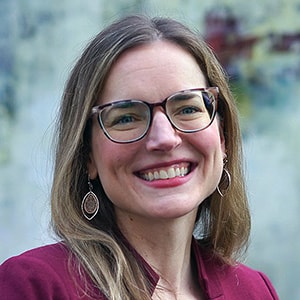
Global Washington (GlobalWA), the premiere West Coast global development association, is pleased to announce an exciting new chapter. Elizabeth Stokely has been appointed as Executive Director and will play a pivotal role in leading the organization forward.
Elizabeth joins GlobalWA from Accion International, bringing over 16 years of global development experience across a variety of sectors and countries. Her extensive background in program design, strategy development and execution, and fundraising positions her as an invaluable asset to the organization. Elizabeth has a strong reputation for innovative thinking, transparent leadership, and a deep understanding of the industry landscape.
“I am honored to join Global Washington, an organization that has been instrumental in fostering collaboration and driving interdisciplinary approaches to addressing complex global problems. I look forward to working with our dedicated members to build partnerships, spark innovation, and continue strengthening Washington State’s role in creating a more prosperous world for all.”
In her role as Executive Director, Elizabeth will lead GlobalWA’s program development, member partnerships, and working groups, while ensuring financial sustainability, continued member support, and sound operations. Jane Meseck, who has been leading Global WA since June of 2024, will continue as Strategic Advisor, working one day a week to support Elizabeth’s transition into the ED role.
Sara Rogge, board chair of GlobalWA, said, “On behalf of the entire GlobalWA board, I am delighted to welcome Elizabeth as the new Executive Director. Elizabeth’s experience working in global development and her leadership experience working with diverse partners and geographies will serve her well as GlobalWA’s next leader. I also want to thank Jane Meseck for her leadership and support as the interim ED over the past 4 months and for her ongoing service to GlobalWA as Strategic Advisor.”
Background on Elizabeth Stokely
At Accion, Elizabeth led a diverse portfolio of global partners, securing investments in and shaping initiatives focused on financial inclusion and women’s economic empowerment with Mastercard, USAID, and many others. Her experiences founding a social impact consulting firm, leading projects on the ground with the Peace Corps and Fulbright, and engaging and convening global leaders at the Inter-American Dialogue, have provided her with the opportunity to lead diverse teams and facilitate collective action. She holds an MBA from USC’s Marshall School of Business and is fluent in Spanish.
Please contact Joel Meyers, Director of Communications, GlobalWA, at comms@globalwa.org with any questions.