Akhtar Badshah is an expert on social impact, philanthropy, CSR and international development, an author and artist. He is the co-founder of Purpose Mindset, founder and Chief Catalyst of Catalytic Innovators Group, a consulting practice focused on accelerating social impact through catalytic innovation. He is a Distinguished Practitioner at the University of Washington, School of Business (Bothell Campus) and Evans School of Public Policy and Governance. He also is a faculty lead at START Center at the Department of Public Health and has served on the Global Washington board since 2008.
– – –
Sometimes, it begins with the vision of one person who sees possibility where others see fragmentation.
I met Bill Clapp in the early 2000s when we launched the Digital Partners Foundation. He invited me to the early gatherings of Global Partnerships—an effort he helped shape, inspired in part by Muhammad Yunus and the growing momentum around microfinance in Central America.
Even then, Bill was deeply committed to international development and to the idea that each of us has a role to play in helping people lift themselves out of poverty. He was not only a business leader, but a civic leader—someone who saw responsibility and opportunity as inseparable.
He also understood something important about Seattle at that moment in time. With the rise of the Gates Foundation, he anticipated that many individuals from Microsoft and beyond would be inspired to contribute—either by launching their own initiatives or supporting organizations already advancing development work around the world.
When I later joined Microsoft to lead its philanthropy efforts, Bill and I often spoke about how Seattle was emerging as a global hub for international development. Institutions such as PATH, World Vision, World Concern, the University of Washington, and the Gates Foundation had created a powerful ecosystem. Out of those conversations—with leaders across philanthropy, academia, and civic life, including Bill Gates Sr.—Global Washington was born.
Global Washington had a simple but powerful charter: to bring together the international development community across Washington State. It created a network that connected organizations large and small—foundations, nonprofits, companies, and academic institutions—to convene, collaborate, share ideas, and advocate. It became a place where global voices could meet, where visitors from around the world could engage with a local community, and where those seeking to get involved could find a starting point.
For 16 years, first under Bill’s leadership and then through the continued stewardship of committed leaders, Global Washington provided a space where people could show up—where the flame of internationalism was kept alive. Through its work, it elevated innovative ideas, amplified smaller organizations, and strengthened the collective voice of a community committed to global development.
Now, that chapter is coming to a close. The world around us has changed rapidly—especially in how we convene, connect, and collaborate. New platforms and global networks now offer expanded ways to engage. During the COVID-19 pandemic, Global Washington embraced this shift, opening its convenings to participants from around the world. And yet, even as those possibilities expanded, the ground beneath the organization shifted. The gutting of U.S. foreign assistance in 2025 hit GlobalWA’s members hard and ultimately made continued operations impossible.
I am proud that the Board chose to wind down thoughtfully and responsibly, ensuring that its work would not end, but rather seed new ideas and inspire the next generation of leaders—the next “Bills”—to carry this vision forward.
Not long ago, we saw images of Earth transmitted from Artemis missions—our small, shared planet suspended in space, without visible boundaries or divisions. It was a powerful reminder that we are all in this together.
Global Washington as an organization may come to an end, but its spirit—of unity, shared humanity, and collective responsibility—will endure. And somewhere, the next visionary will step forward to make the case for international development once again.
Some ideas outlive institutions.
The work of building a more just, interconnected world goes on—and the next generation of leaders will carry it forward.
I’m writing to share some difficult news about GlobalWA’s future. After careful consideration, the GlobalWA Board has decided to close the organization. Over the next five months, we will thoughtfully wind down our work with operations concluding on June 30, 2026. We know this news may be painful, surprising, or unsettling, and we are deeply aware of what GlobalWA has meant to so many of you.
This decision was made with deep sadness and only after a thorough analysis of the sector landscape, funding environment, and our operating model. While saying goodbye is difficult, we believe the most responsible path forward is to close now, when we can still honor our commitments, serve our community, and preserve our legacy.
Why Now
The global development sector is experiencing profound and lasting disruption. Significant cuts to USAID funding, alongside broader shifts in other philanthropic priorities, have reverberated across our entire ecosystem. These changes have constrained organizations’ ability to sustain their own operations, let alone meaningfully invest in networks and capacity building. These long-term challenges facing our sector, and especially support and membership organizations like ours, have made it increasingly difficult to imagine a sustainable path forward.
We explored multiple scenarios and potential partnerships and ultimately concluded that a planned closure best aligns with our values and serves the community we have built over the last 16 years. While we remain open to opportunities for elements of GlobalWA’s brand, programs and network to continue in new forms, we are moving forward with a clear-eyed understanding of our limited resources and the reality that a more supportive funding environment may not emerge for some time.
Our Commitment to You
Between now and June 30, we will continue to operate with full transparency and purpose. All programming and membership benefits will continue, and we will honor our commitments to provide events, resources, and opportunities to learn, connect, and mobilize.
Throughout this transition, we will share regular updates about timelines, decisions, and ways for you to stay informed and connected. We are also planning a member celebration event in early June to honor the contributions, achievements, and spirit of this community. Details will be shared soon, and we hope you will join us in marking this milestone together. If you have questions about programming, ideas for potential connections to continue programs, or feedback you’d like to share during this transition, please reach out to us at info@globalwa.org. More information, including an FAQ, is available on our website at globalwa.org/globalwa-closure.
The work that GlobalWA has championed—fostering connection, strengthening capacity and driving collective action—remains critical to our sector. By closing intentionally, we aim to preserve the knowledge, relationships and resources that will allow this work to continue in new forms.
On behalf of the GlobalWA team and Board, I want to thank each of you for your partnership, leadership and dedication over the years. We are incredibly proud of what we’ve built together, and your support, ideas, and collaboration have shaped this community in countless ways. While this chapter is ending, I am confident that the impact of our collective efforts will continue to be felt for years to come.
Written By Spreeha Foundation Originally posted on the Spreeha Foundation website 12/9/25
Artificial intelligence has been an emerging subject in nonprofit circles for several years, often sitting at the periphery of conversations – either viewed with skepticism or treated as something that belonged primarily to corporate or academic domains. At this year’s Global Washington Annual Conference in Seattle, that perception appeared to shift. The tone of the discussion was notably different: nonprofit leaders were not debating whether AI mattered, but rather seeking clarity on how to integrate it responsibly, meaningfully, and in ways that enhance service delivery for communities.
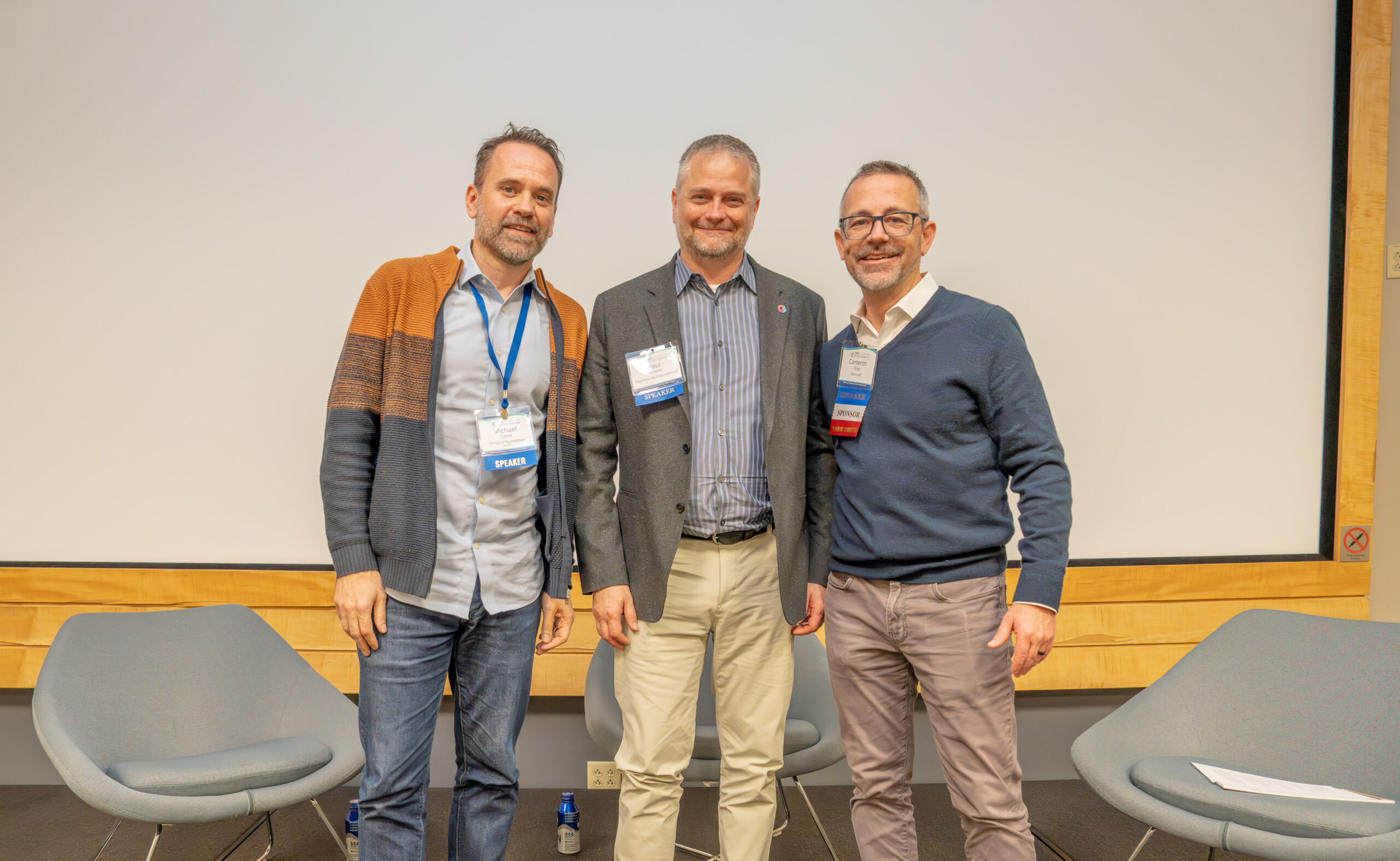
This evolving mindset framed one of the conference’s first dedicated AI workshops, featuring Michael Tjalve, PhD, Board Chair of Spreeha Foundation, as a panelist alongside development leaders Paul Essene of Opportunity International and Cameron Birge of Microsoft. The session centered on practical considerations for mission-driven organizations exploring AI, balancing its potential to strengthen nonprofit work with a clear-eyed discussion of limitations, risks, and organizational readiness.
Michael Tjalve with co-panelists Paul Essene and Cameron Birge at the Conference
Spreeha’s Perspective: Application Over Abstraction
Spreeha Foundation’s contribution to the conversation was rooted in operational experience rather than theory. As an organization operating a tech-enabled urgent care network in Bangladesh, Spreeha has been testing how digital tools and carefully designed AI-assisted systems can support frontline healthcare delivery. Current efforts focus on strengthening triage decision-making, providing structured decision-support guidance for health workers, improving diagnostic and referral pathways, and designing follow-up systems for patients managing chronic conditions.